

Why compostable fruit labels are the future of fresh produce packaging

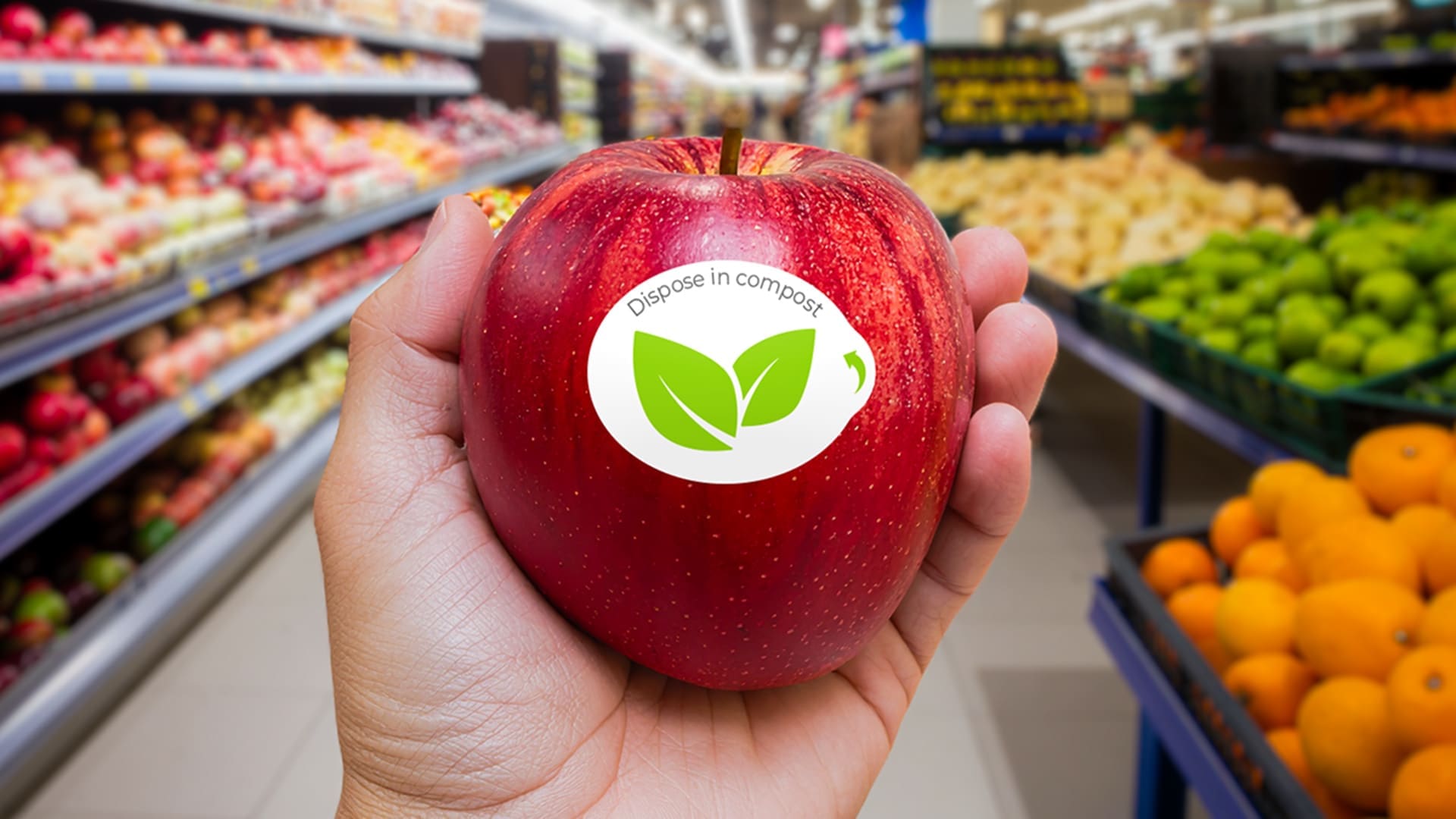
As sustainability becomes a defining priority for consumers and regulators, the fresh produce industry faces mounting pressure to reduce single-use plastics. Traditional plastic packaging— contributes significantly to global waste streams and environmental degradation. Enter compostable fruit labels, a small but powerful innovation that is reshaping the way we think about packaging.
The problem with single-use plastic packaging
Plastic packaging dominates the fresh produce industry and its environmental impact is undeniable. Micro plastics persist in ecosystems for hundreds of years, contaminating soil and waterways, and posing risks to wildlife. Even recycling systems struggle to cope with the complexity of mixed materials, leaving much of this packaging destined for landfill or incineration to avoid contamination in the waste stream.
Mintel research shows that consumer concern about plastic waste in food packaging is at an all-time high, with over 70% of UK consumers worried about packaging ending up in oceans or landfills.
Recycling reality: EU & US
Despite decades of effort, recycling rates for plastic packaging remain low globally.
European Union
In 2023, the EU recycled 42.1% of plastic packaging waste, up from 38.2% in 2013 Leading countries like Belgium and Latvia exceed 59%, while others such as Hungary and France lag below 26%.
Challenges:
- Complex composite materials hinder sorting
- Inconsistent infrastructure across member states
- Limited markets for secondary plastics, making recycled resin less competitive
United States
The national recycling rate for plastic packaging is just 13.3%, according to the U.S. Plastic Pact, and overall plastic recycling hovers around 8.7% of total plastic waste.
Challenges:
- Fragmented regulations across states
- High contamination rates in recycling streams, costing facilities $300M annually
- Virgin plastic often cheaper than recycled due to low oil prices
Economic barriers
Recycled plastics frequently cost more than virgin plastics, driven by collection, sorting, and cleaning expenses. Virgin resin prices are tied to oil markets, which often makes new plastic cheaper. This imbalance discourages manufacturers from using recycled content despite sustainability pledges.
McKinsey highlights that the recycling system suffers from structural inefficiencies: 70% of certain engineering plastics are never collected, and of those collected, another 70% are not properly recycled. The sheer variety of polymers creates logistical nightmares for universal recycling solutions.
Certified compostable fruit labels: A smarter alternative
Certified compostable fruit labels are emerging as a small yet powerful packaging innovation in fresh produce. As industry experts point out, while originally designed for branding and product identification, fruit labels have evolved into essential tools for consumer engagement, transparency, and operational efficiency. Today, certified compostable labels offer a practical solution that aligns both corporate environmental goals and consumer expectations for sustainable packaging to remove or minimize plastic packaging waste.
The Sinclair – T55 label offers a practical, scalable solution that reduces reliance on plastic packaging without compromising performance or function. These labels are independently certified for both home and industrial composting, breaking down into usable compost within a defined timeframe and leaving no harmful residue.
“Sustainability can start with the smallest details. Even a fruit sticker can help build a circular economy,” commented Duncan Jones, Senior Marketing Manager, “Sustainability in packaging isn’t just about reducing or removing waste—it’s about rethinking the entire value chain. Minimizing materials and embedding circular design principles into corporate strategy transforms packaging from a compliance checkbox into a driver of innovation, resilience, and long-term brand value.”
Key benefits include:
- Reduced plastic packaging waste
- Convenient disposal: Consumers can compost labels along with fruit peels
- Compliance ready: Meets global composting standards (e.g., TÜV AUSTRIA OK compost HOME)
- Branding & functionality: Maintains high-speed application and durability through the supply chain
Consumer demand & market trends
Consumer expectations are clear: sustainability matters. McKinsey’s global survey shows that while price and quality remain top priorities, recyclability and compostability rank among the most valued packaging traits, especially for fresh produce.
Forbes echoes this trend, noting that eco-friendly packaging is no longer a niche- it’s a business imperative. Brands that embrace compostable solutions not only reduce environmental impact but also strengthen consumer trust and loyalty as part of their overall business strategy.
Compliance & futureproofing
Legislation and packaging regulation is catching up with consumer sentiment, but this is very fragmented across geographical regions. From the EU’s Packaging and Packaging Waste Directive (PPWR) to proposed bans on non-compostable fruit labels in markets like Australia, regulatory frameworks are pushing the industry toward circular packaging solutions. Certified compostable labels, with dual certification for home and industrial composting, help producers stay ahead of compliance requirements and avoid costly operational disruptions.
 The bottom line
Compostable fruit labels represent more than a packaging tweak—they are a strategic response to environmental, regulatory, and consumer pressures. By replacing single-use plastic packaging with certified compostable labels, the fresh produce industry can:
- Reduce plastic waste at scale
- Support circular economy principles
- Meet evolving compliance standards now
- Deliver on consumer expectations for sustainability to enhance their brand offering
References
McKinsey & Company – Addressing the Challenges of Plastic Waste: Circularity and Leakage
McKinsey & Company – Sustainability in Packaging 2025: Inside the Minds of Global Consumers
Forbes – Embracing Sustainability: The Rise of Eco-Friendly Packaging Solutions
Forbes – Why the Circular Economy Is Failing and How It Can Actually Work
Mintel – Sustainable Packaging Insights
Eurostat – Plastic Packaging Waste Recycling Rates in the EU
U.S. Plastic Pact – National Recycling Rate for Plastic Packaging