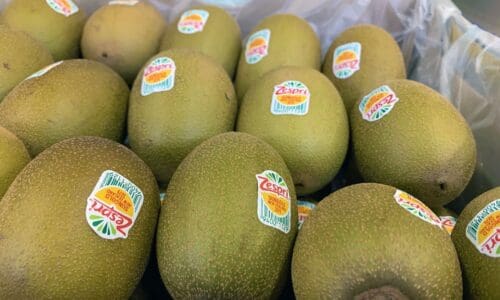

Are fruit labels food-safe?

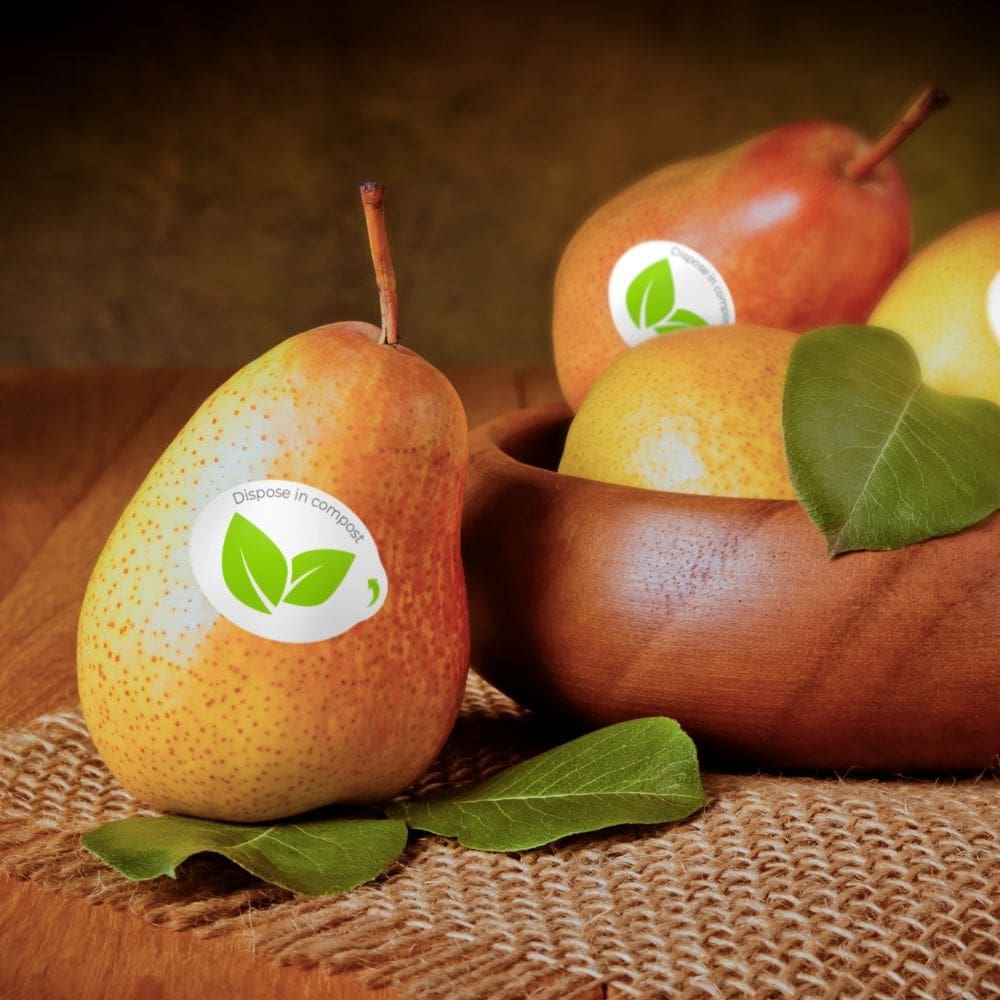
If you’ve ever picked up an apple or banana and wondered whether the small sticker attached to it is safe, you’re not alone. These labels, commonly known as Price Look-Up (PLU) stickers/labels, are a familiar feature on fresh produce and help identify fruit characteristics and correct pricing at checkout. But are fruit labels food-safe?
The short answer is yes. Fruit labels are designed to be food-safe and meet recognised compliance standards. However, understanding what “food-safe” really means, and what it does not mean, is essential.
Understanding Terminology: Food-safe vs food-grade vs edible
When discussing materials that come into contact with food, terms like food-safe, food-grade, and edible are often used interchangeably. In reality, each has distinct meanings and understanding these differences is key to fruit sticker safety.
Food-grade’ refers to materials that meet recognized regulatory standards for food contact
‘Food-safe’ describes their ability to be used in contact with food without transferring harmful substances under normal conditions.
So, yogurt pots, cheese wax, pizza boxes and fresh produce bags are all examples of food safe packaging. Similarly, food-grade fruit labels are food-safe for application to fresh produce when used as intended.
Food grade = food safe for direct contact with food
Importantly, a fruit label that meets food grades requirements so is food-safe does not mean edible. Fruit labels are designed to safely be in contact with fruit and vegetables, but they are not ever intended to be eaten.
What makes fruit labels safe?
They are designed to be safe for use on fresh produce, and they are made using carefully regulated materials that meet food safety standards. Each part of the label the adhesive, ink, and label material, and the finished manufactured label itself (whether conventional or compostable), must be made of materials approved for food contact.
The adhesive used on fruit stickers is food-safe and compliant with FDA and EU regulations. This means that if a small amount of residue is left behind after removing the sticker, it is non-toxic and safe.
The inks and label materials are also chosen to be safe for direct contact with food. They are tested to ensure that no harmful substances transfer onto the fruit.
What happens if you accidentally eat one?
While fruit labels are safe for contact, they are not intended for consumption and provide no nutritional value. If a label is accidentally swallowed, it will typically pass through the digestive system without being digested, much like chewing gum. While this is unlikely to cause harm, it is not recommended.
Are compostable fruit stickers edible?
With the rise of environmentally conscious packaging, many consumers ask whether compostable fruit stickers can be eaten. The answer is no, they are food grade safe and therefore food-safe but like conventional stickers it is not recommended.
Compostable labels are designed to break down under specific conditions (industrial or home composting), but they are not edible and not approved for consumption. Even plant-based materials may include components that are not digestible or suitable for ingestion
Rethink Fruit Packaging
Rethink Fruit Packaging
Find out how our certified home and industrial compostable fruit labels can help you be compliant with industry regulations
Important considerations for consumers
Although fruit labels are designed with safety in mind, there are a few practical points to consider.
It is always best to remove labels and all packaging before giving whole fruits to children. Sinclair labels are designed not to leave residue and are easily removable via the non-sticky tab which easily lifts up. All health organizations recommend that fruits and vegetables should always be washed before consumption in case of other incidental contaminants from the journey through supply chain.
Composting and disposal
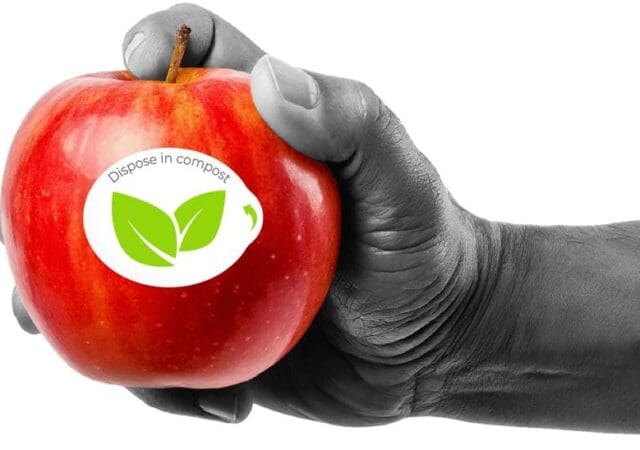
Fruit stickers should be removed before composting to ensure full contact with the other compost matter. On Sinclair labels you may find a clear instruction, such as ‘Dispose in compost’, ‘Compostable’ and/or the code OKI-S0728 (Industrial compostable) or OKH-S0728 (home compostable).
Local-waste guidelines should always be checked before disposal as they vary from country to country and locality to locality.
Best practice
To ensure hygiene and safety when handling produce labels:
- Remove fruit stickers before washing or eating fruit
- Wash produce after label removal
- Dispose of labels in the correct waste stream
Final thoughts
Fruit labels play a critical role in modern produce supply chains, supporting traceability, pricing, and retail efficiency. While they are carefully designed to meet strict food-contact regulations, it is important to use them as intended.
Fruit labels are food-safe for contact but not edible, removal before consumption is always recommended.