

Are Fruit Stickers Edible? Safety & Materials Explained

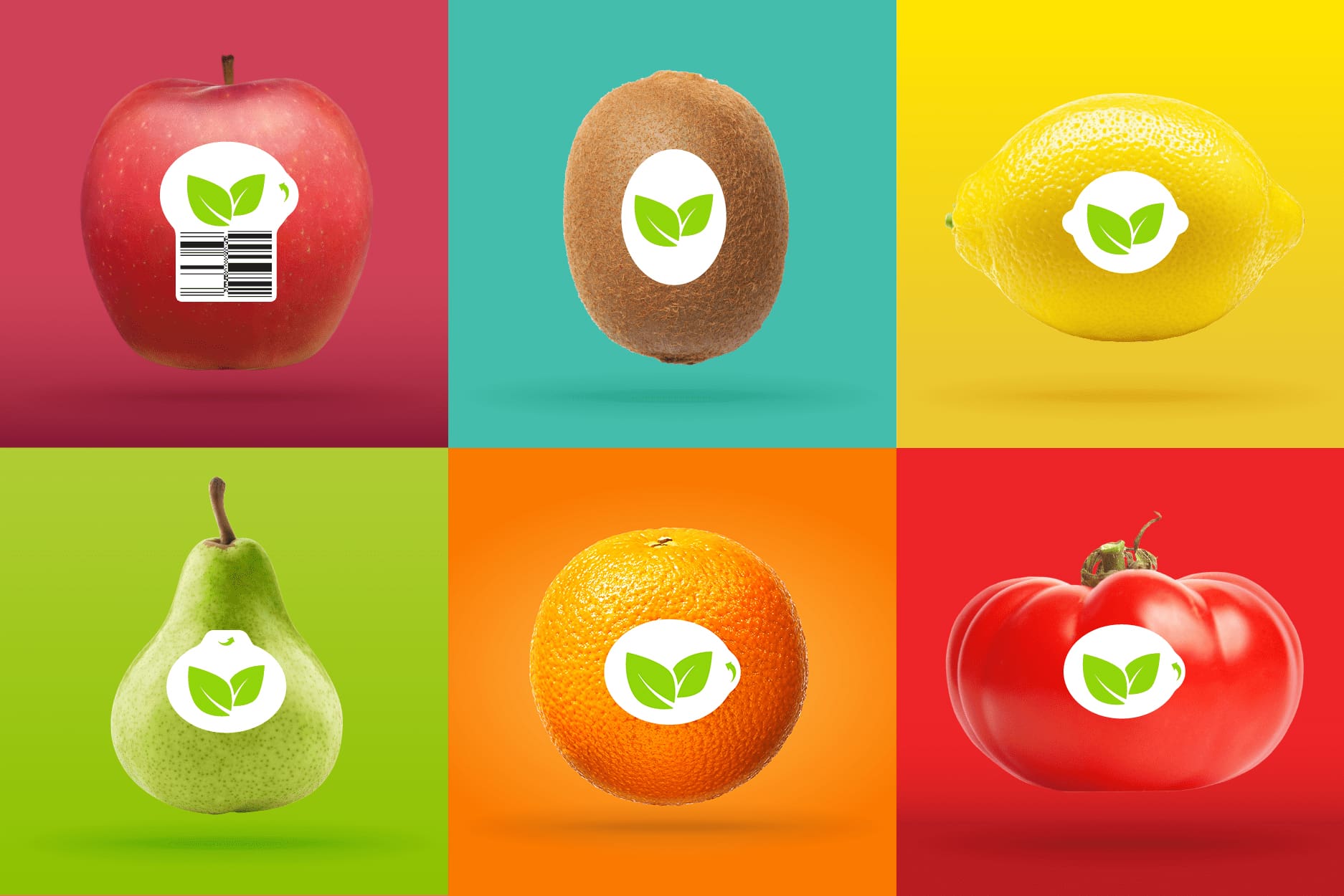
No, we do not recommend eating any fruit stickers. However, you may take a crisp bite of an apple, only to realize you’ve forgotten to peel off the small sticker. Panic might follow as you wonder, “Is it safe to eat fruit stickers?”
The components used to make these labels—from the label material itself and adhesive to the inks—are regulated to ensure they are food safe and non-toxic if accidentally eaten. This post will break down what fruit stickers are made of, the safety standards they must meet, and the industry’s commitment to food-safe labeling solutions.
The short answer: Safe if ingested, but not food
To put it simply, fruit stickers are not edible. They offer no nutritional value and are not designed to be eaten. However, regulatory bodies like the U.S. Food and Drug Administration (FDA) recognize that accidental consumption is possible. Therefore, the materials used in fresh produce labels are required to be food-grade, meaning they are safe for direct contact with food and won’t cause harm if you accidently to swallow one.
Materials breakdown: What are fruit stickers made of?
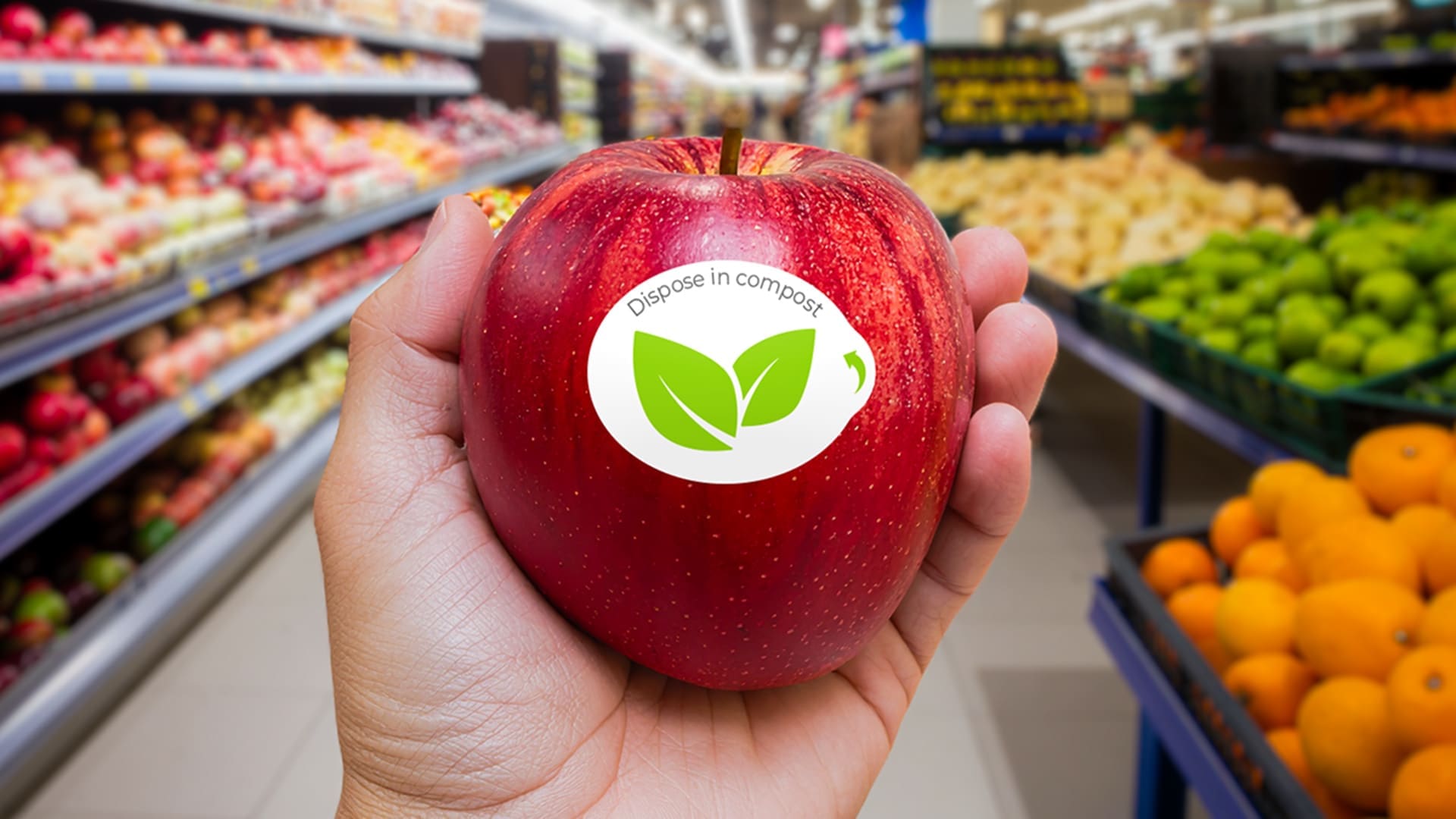
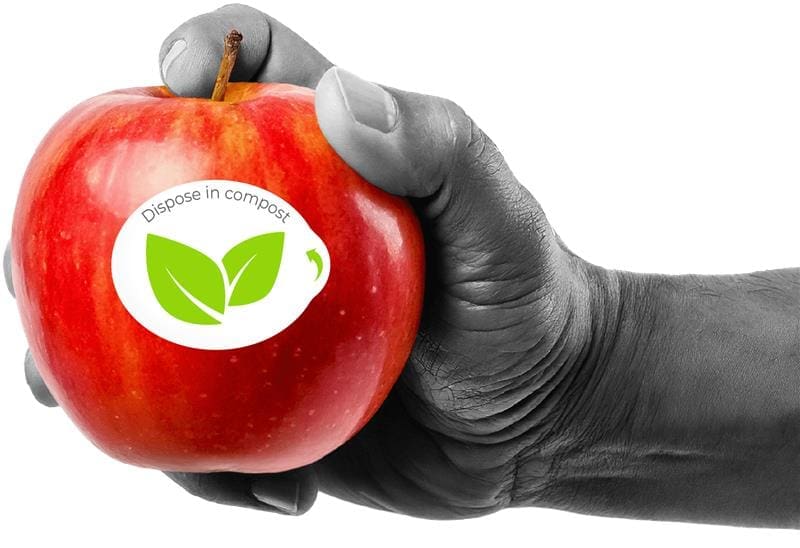
The construction of a fruit sticker is a careful balance of durability and safety to provide consumers information at point of sales (brand, origin, variety etc.). Single-use plastic fruit labels are being replaced by compostable fruit stickers which at end-of-life compost done to become part of safe usable soil-enriching compost. Each component is chosen to withstand the journey from the packinghouse to the grocery store while meeting strict market regulatory and food-safety requirements.
The main body of the fruit label
The main body of the sticker, known as the substrate, is typically made from specialized paper, traditional films or compostable material. These materials are chosen for their ability to hold vibrant prints and adhere to various fruit surfaces (and not leave residue when peeled off). Importantly, these are not just any materials; they are specifically approved for direct food contact. They are designed to be durable enough to handle refrigeration and moisture without falling apart, yet safe enough to rest on the skin of the fruit you may eventually eat.
Adhesives: The glue that sticks
Many people wonder if the adhesives used on produce are toxic. The answer is no. The adhesives on food-safe fruit stickers are food-grade and pressure-sensitive, formulated to stick to the wide range of fruit surfaces—from the waxy peel of a lemon to the fuzzy skin of a peach. These adhesives are compliant with strict food safety regulations, ensuring they are safe to apply to produce without contamination.
Inks and Coatings: The printed information
The inks used to print brand logos, PLU codes, and other information are also subject to food safety standards. These inks must be food-contact compliant, meaning any potential for migration into the food is well within safe limits. Protective coatings applied over the ink also meet these same rigorous criteria, ensuring every part of the finished label is safe.
Safety standards and regulatory compliance
Ensuring the safety of produce labels is a top priority for manufacturers. In the United States, the FDA sets the guidelnes for what materials are considered safe for direct contact with food. These regulations are outlined in Title 21 of the Code of Federal Regulations (CFR). Any material used in a fruit label sticker, from the substrate to the adhesive, must comply with these rules.
Similarly, labels intended for the European market must meet the standards set by the European Union. These comprehensive regulations govern everything from material composition to migration testing, which verifies that no unsafe substances transfer from the label to the food.
At Sinclair, we adhere to all market regulations required, ensuring our food-safe stickers meet the highest standards. Learn more about our quality commitment on our company overview page.
What happens if you eat a fruit sticker?
If you accidentally swallow a fruit sticker, it will safely pass through your digestive system. While it’s certainly not recommended your purposely do this or make a habit of it, a single, accidental ingestion is highly unlikely to cause harm.
The key point to remember: a sticker on fruit is not edible, they are manufactured with consumer safety in mind. All components, and the finished label, are food-safe, non-toxic and designed to be safe in the event of accidental consumption.
Sinclair’s commitment to safe and compostable fruit sticker solutions
At Sinclair, we are dedicated to providing produce labeling solutions that are both safe for consumers and responsible for the planet. Our portfolio includes a wide range of food-safe stickers that meet and exceed global regulatory standards, including FDA and EU compliance.
We are also at the forefront of sustainable innovation, offering certified compostable labels that deliver the same high performance and food-safety as our traditional products. As pioneers of the first certified ‘finished product’ compostable fruit label, our commitment to sustainability drives us to continually develop materials and processes that help reduce the environmental impact of produce labeling.
With over 40 years of expertise in fruit and vegetable labeling, we understand that the future of the industry lies in solutions that protect both consumers and the environment. Whether you need traditional food-safe labels or cutting-edge compostable alternatives, we have the expertise and innovation to support your brand’s goals.
Why Fruit Labels Are Used — A Minimal Packaging Solution
Fruit labels play an important role in modern produce retail while adding virtually no packaging at all. A single small sticker allows growers and retailers to share essential information with consumers—such as product origin, variety, brand, and PLU codes—helping ensure accurate pricing, traceability, and food safety throughout the supply chain. Compared to trays, wraps, or plastic bags, fruit labels represent one of the lowest‑impact packaging options available, delivering necessary information without enclosing or covering the produce itself.
As the industry continues to reduce unnecessary packaging, compostable fruit labels offer an even more responsible alternative. These labels provide the same performance, visibility, and food‑safety assurances as traditional options, while being designed to break down at end of life—supporting a shift toward packaging solutions that are as minimal as possible while still meeting consumer, retailer, and regulatory needs.
Global reach, local expertise
Global reach, local expertise
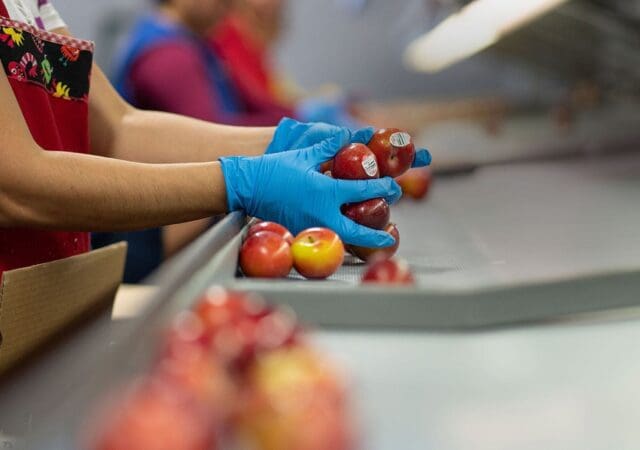
With 9 label-manufacturing sites around the world and labeling systems installed in more than 45 countries,
Sinclair delivers comprehensive solutions that enable packers and shippers to showcase their brand identity while supporting the global PLU system that keeps the produce industry running efficiently.